Piping Installation Precautions
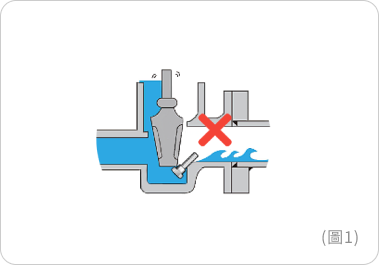
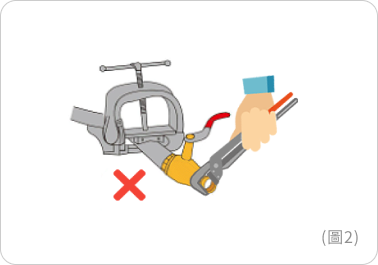
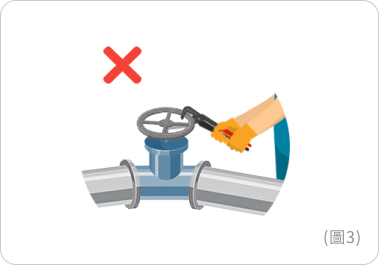
1. Before piping, check the valve area for debris and oil. If any are found, remove them first. Debris is a common cause of leaks, damaging flow-blocking parts and causing valve damage, requiring replacement (Figure 1). 2. When locking the pipe end into the valve's inlet/outlet threads, avoid over-locking, which could impact the outer edge of the inlet, causing valve deformation or even cracking. 3. During piping, use clamps to tighten the pipe fittings and pipe wrenches to grip the hexagonal part of the valve for locking. Do not clamp the valve and use pipe wrenches to rotate the pipe fitting for locking. 4. When locking valves, the pipe wrench should be gripped close to the piping end, not far from it (Figure 2). 5. After piping, test for leaks. If a slight leak is found, open the valve first, remove any debris, and then close the valve. Do not forcibly tighten it with a lever (Figure 3).
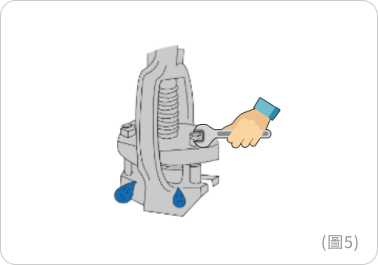
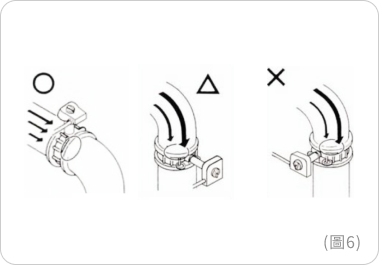
6. The center points of the two flanges at the pipe end should be accurate, and the two flange faces should be parallel. Piping should not be carried out under conditions where angles are formed or the flange faces are uneven (as shown in Figure 4). 7. Burrs on the inner and outer corners of the flange face should be removed and chamfered before piping. 8. When the valve stem leaks, gradually tighten the valve flange bolts to stop the leak (as shown in Figure 5). 9. When assembling butterfly valves and double-sided check valves, if the inlet end is a bend and there is a pressure difference impact in the pipe, the valve stem should be positioned in the direction of the pressure difference to prevent the flow-blocking blades from wearing unevenly and becoming unstable due to the pressure difference. If the outlet end is a bend, the valve stem should be positioned at a 90° angle to the direction of the pressure difference to reduce pressure drop (as shown in Figure 6). 10. When fixing and locking flanges, they should be tightened gradually in a diagonal and 90° diagonal sequence. They should not be tightened in an adjacent sequence, nor should a single flange be locked at the beginning of the fitting process.